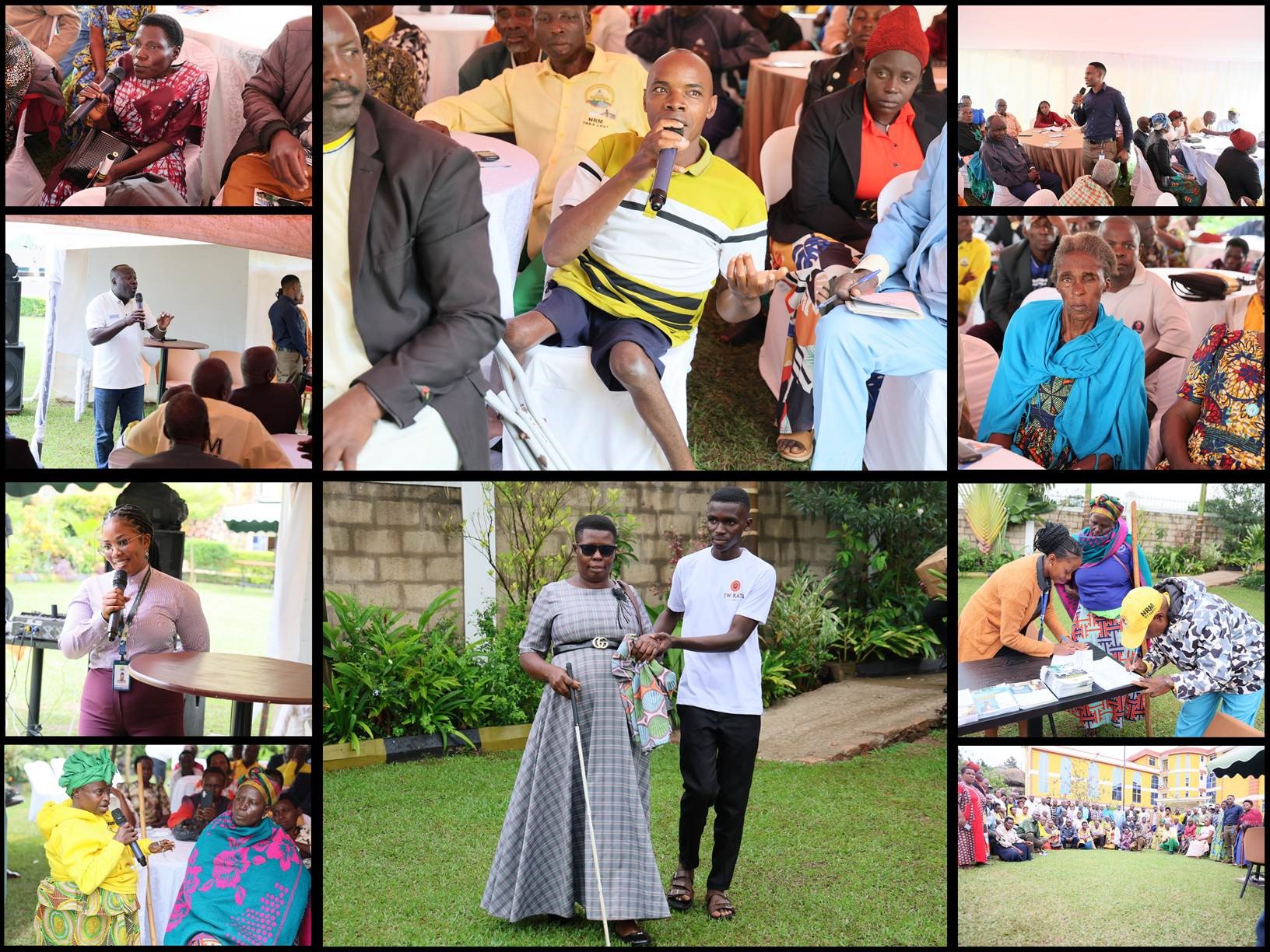
Persons with disabilities (PWDs) in Kagadi District have been urged to actively participate in tax compliance as a pathway to economic empowerment and national development.
This call was made during a taxpayer sensitisation engagement held at JBW Kate Hotel. During the session, PWDs were guided through key tax obligations, their rights as taxpayers, and the various government support programs available to them.
Speaking at the event, Dr. Sewante Julius, the Chairperson of the PWDs emphasized the value and potential of Persons with Disabilities, noting that they are capable of contributing meaningfully to the economy.
“People with disabilities are special, gifted, and capable. Government has put in place programs and financial support to empower them, and services such as the upcoming open clinic at Fort Portal Regional Referral Hospital will ensure you are well supported,” he said.
Kagadi District Councillor, Vicent Aligonzawenka rallied PWDs to embrace hard work and fulfill their civic responsibilities, including paying taxes.
“Do not underestimate yourselves. Government recognises us as people of great importance. Being disabled does not exempt us from contributing to national development. We can work, do business, and pay taxes just like everyone else and these taxes in turn serve us,” he said.
During the session, URA officer Julius Akankwansa guided participants through different tax categories, including Pay As You Earn (PAYE), explaining that it applies to individuals earning a monthly salary of Shs 230,000 and above.
“Keeping proper records is essential. It helps you avoid penalties and ensures you do not pay more tax than required,” Akankwansa advised.
He further stressed the importance of timely tax compliance:
“PAYE returns must be filed by the 15th day of the following month, while rental and presumptive taxes are filed annually.”
Akankwansa also warned against fraud in Tax Identification Number (TIN) registration.
“TIN registration is absolutely free. No one should charge you for it. Visit the URA Kagadi office for assistance whenever needed.”
He highlighted the benefits of having a TIN, including facilitating land registration, vehicle purchase, employment, and starting a business.
Participants, however, raised concerns about the tax burden, questioning why PWDs are taxed at similar rates as non-disabled persons, and called for more inclusive tax relief measures.
Addressing concerns from participants, URA’s Naluggwa Babra, officer Regional Tax out-reach, clarified procedures for tax exemptions available to PWDs.
“If you qualify for tax exemption, you must apply formally through the Commissioner. Once approved, you will be cleared,” she explained.
“PWDs importing assistive equipment in groups are not taxed, and small businesses may also fall below the taxable threshold. This sensitization will help you to know your rights, and all URA services are free.”
By Garry Murungi