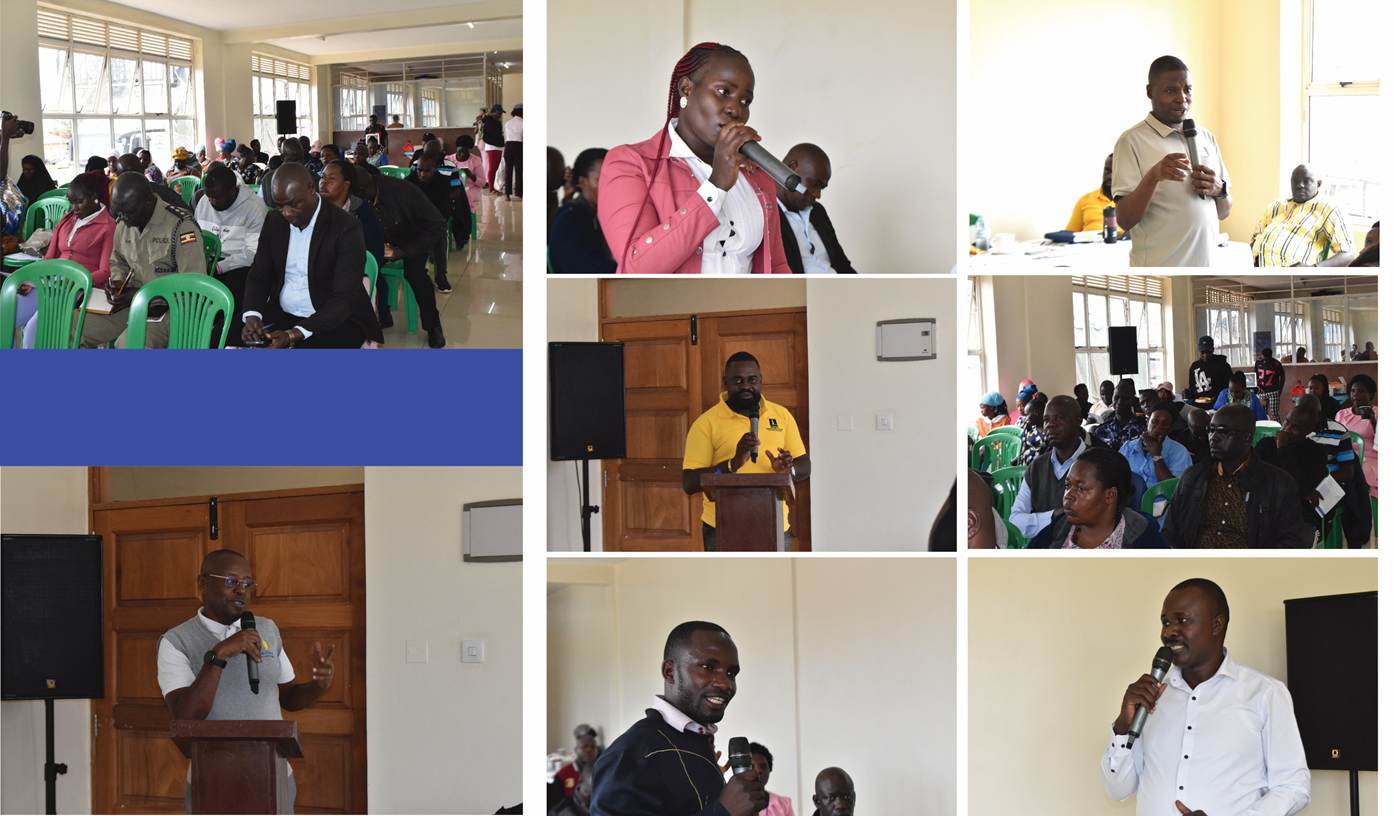
URA has intensified taxpayer engagements at key border points to strengthen compliance and address bottlenecks in cross-border trade.
During an engagement with traders and clearing agents at the Mutukula border recently, Robert Wamala, the Supervisor of Tax Education, emphasized proper record-keeping and business formalization as essential requirements in business growth.
“Formalizing your business is the foundation for growth and tax compliance. It will allow you to access wider markets and government opportunities,” Wamala told participants.
Francis Buringa, the Regional Ag. Manager of Customs urged traders to adhere to established trade procedures to avoid inconveniences that come with non-compliance.
He reaffirmed URA’s commitment to supporting taxpayers’ compliance, noting that the tax body is implementing a three-pronged strategy of educating, engaging, and enforcing.
“This is to improve service delivery and strengthen relationships with our stakeholders,” Buringa stated.
During the meeting, traders tasked officials to clarify the Simplified Trade Regime (STR) and items that qualify for tax exemption.
“Most of our traders operate on a small scale. This means that this regime has the potential to benefit many of us. However, there is still a gap in awareness and understanding of how the policy works,” Mujjasi David, the Mayor of Mutukula Town Council, observed.
For URA, STR allows taxpayers importing goods worth USD 2,000 or less to clear their goods without the involvement of a clearing agent.
He, however, emphasized that this does not amount to a tax exemption but rather a simplified process in which a taxpayer declares their goods, taxes are assessed, and clearance is completed by an officer at the border point.
In conclusion, URA committed to continuous engagement and better service delivery.
By Francis Mawanda